


oo bro.bear tomahawk.Originally Posted by SPRINGFIELD_XD_40

Results 51 to 60 of 177
-
09-19-2012, 09:50 PM #51C.I.A.


- Join Date
- Jun 2006
- Posts
- 4,009
 Re: Ancient, Medieval and Modern Weapon Guessing
-
09-19-2012, 09:56 PM #52C.I.A.
- Join Date
- Jun 2006
- Posts
- 4,009
Re: Ancient, Medieval and Modern Weapon Guessing
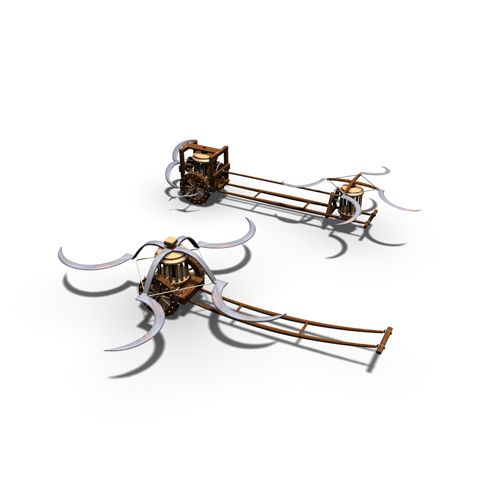
correct bro. lain tawag ana kay Scythed chariot pero kana nga model kang Leonardo Originally Posted by machinecult

The scythed chariot was a modified war chariot. The blades extended horizontally for about 1 meter (3 ft) to each side of the wheels. The Greek general Xenophon (430−354 BC), an eyewitness at the battle of Cunaxa, tells of them: "These had thin scythes extending at an angle from the axles and also under the driver's seat, turned toward the ground".
Dismissing completely 17th to 19th century ideas of a Canaanite, Assyrian, Indian or Macedonian origin,[1] Nefiodkin also challenges Xenophon's attribution of scythed chariots to the first Persian king Cyrus, pointing to their notable absence in the invasion of Greece (480−479 BC) by one of his successors, Xerxes I. Instead, he argues that the Persians introduced scythed chariots sometime later during the Greco-Persian Wars, between 467 BC and 458 BC, as a response to their experience fighting against Greek heavy infantry.
A scythed chariot was the special weapon of the Persian Immortal.Last edited by Deadstring67; 09-19-2012 at 09:59 PM.
-
09-19-2012, 11:08 PM #53C.I.A.

- Join Date
- Jan 2011
- Posts
- 5,836
Re: Ancient, Medieval and Modern Weapon Guessing
ot
 a-choy2x ra nang damascus steel
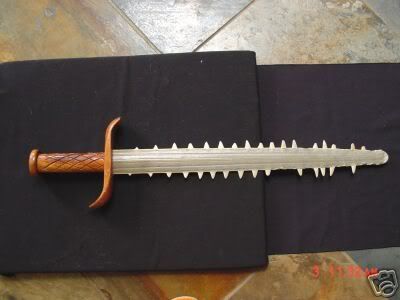
kini, unsa ni
-
09-19-2012, 11:08 PM #54C.I.A.

- Join Date
- Mar 2008
- Posts
- 2,203
Re: Ancient, Medieval and Modern Weapon Guessing
OT boss naa mi ani gud.hehe bag.o lang jud padala gikan istits Originally Posted by Deadstring67
-
09-19-2012, 11:23 PM #55C.I.A.

- Join Date
- Apr 2009
- Posts
- 5,613
Re: Ancient, Medieval and Modern Weapon Guessing
aw sayop diay ko bai.hehehe.parihas raman gud ug nawng sa catapult. Originally Posted by Deadstring67
Ring gun ni sir.. Originally Posted by Deadstring67
kita ko ani sa PawnStar gibaligya mahal kaayo.hehe.
-
09-20-2012, 12:15 AM #56C.I.A.

- Join Date
- Apr 2009
- Posts
- 6,075
Re: Ancient, Medieval and Modern Weapon Guessing
Originally Posted by Deadstring67
nagamit diay ni?? i think this is the war chariot idea ni leonardo da vinci.. but i could be wrong hehehe
-
09-20-2012, 01:13 AM #57C.I.A. Platinum Member

- Join Date
- Oct 2008
- Posts
- 4,214
Re: Ancient, Medieval and Modern Weapon Guessing
ang scythed chariot nga na gamit is simply a chariot furbished with scythes on the side (oftentimes on the wheel). Kana kang Da Vinci nga Scythed Chariot is different.
-
09-20-2012, 02:50 AM #58C.I.A.

- Join Date
- Apr 2012
- Posts
- 3,325
Re: Ancient, Medieval and Modern Weapon Guessing
Originally Posted by bleedingboi
The scorpio or scorpion was type of Roman artillery piece. Also known by the name of the triggerfish, it was described in detail by Vitruvius. In the progressive evolution of catapults, the next major improvement after the scorpio was the cheiroballistra.
A weapon of remarkable precision and power, the scorpio was particularly dreaded by the enemies of the Roman Empire.
The scorpio was a smaller catapult-type weapon, more of a sniper weapon than a siege engine, being operated by only one man. The scorpio was basically a primitive giant crossbow, a "catapult with bolts", probably first invented by the Greeks, then later adopted and used on a larger scale by the Roman legions. This catapult used a system of torsion springs, making it possible to obtain very great power and thus a high speed of ejection for the bolts.
The complexity of construction, adjustment and the great sensitivity to any variation in temperature or moisture limited their use, due to the torsion spring which the Romans referred to as tormenta. Moreover, this type of technology, which disappeared as of the High Middle Ages (with the exception of the Byzantine Empire), reappeared during the First Crusade with a new type of catapult based on a system of slings and counterweights which gave rise to the precision balances for the projection of stone balls or giant crossbows (thanks to the progress made in the field of metallurgy).
During the Roman Republic and early empire eras, 60 scorpio per legion was the standard, or one for every centuria. The scorpio had mainly two functions in a legion: in tended shooting, it was a weapon of marksmanship capable of cutting down any foe within a distance of 100 meters. During the siege of Avaricum in the war against the Gauls, Julius Caesar describes the terrifying precision of the scorpio. In parabolic shooting, the range is greater, with distances up to 400 meters, the firing rate is higher (3 to 4 shots per minute) but the precision is significantly less.
Scorpio were typically used in an artillery battery at the top of a hill or other high ground, the side of which was protected by the main body of the legion. In this case, there are 60 scorpio present which can fire up to 240 bolts per minute at the enemy army. The weight and speed of a bolt was sufficient to pierce enemy shields, and usually also sufficient to wound (or outright kill) the warriors who opposed them.
Wiki
-
09-20-2012, 08:33 AM #59Junior Member

- Join Date
- Aug 2012
- Posts
- 271
Re: Ancient, Medieval and Modern Weapon Guessing
how bout this one?


-
09-20-2012, 10:00 AM #60Junior Member

- Join Date
- Aug 2012
- Posts
- 89
Re: Ancient, Medieval and Modern Weapon Guessing
Modified Batuta!!! Originally Posted by henrinator

 Reply With Quote



Similar Threads |
|
 Posting Permissions


|