


The World's Smallest Creatures
When his owner shouts "Heel!" Ducky the dog has little choice but to take things literally. At just over ankle height, the three-year-old short-coat chihuahua from Boston in the U.S. has just been named the smallest living dog in the world by Guinness World Records.
At only 4.9in tall, Ducky weighs less than 1lb 6oz. His head is the size of a large strawberry. "He is such a funny little guy," says his owner Lisa Messier, who bought him for £2,500 when he was 13 months old. "He doesn't go out for walks, but if you want to go out, you can just put him in your bag."
Chihuahuas are the smallest dogs in the world - in fact, the only "natural" toy breed. Other small pups are the result of breeding down larger breeds. Celebrities such as Paris Hilton and Madonna are well-known fans of chihuahuas. Ducky succeeds Danka Kordak, a 5.4in chihuahua from Slovakia, in the record books.
As a 4.9 inch chihuahua is named the world's smallest dog, meet some more of the smallest - and quite frankly the most ridiculously cute - animals you will ever see.
Tiny Tim is a 0.75in Roborovski - the world's smallest breed of domestic hamster. The Mongolian mammals were imported to Britain by London Zoo in the Sixties, and they are never more than 2in.
Mr Peebles, the world's smallest short-haired domestic cat, measures just 6.1in - the size of a typical sixmonthold kitten. After being rescued from a house where he was badly treated, he lives in a vet's clinic in the U.S.
Measuring just over 5in, Dylan the Papillon is Britain's smallest dog. The name of the breed comes from the French word for butterfly because its ears and head resemble the insect. The breed evolved in France and Belgium and it has been said that Marie Antoinette was a fan of the Papillon's ancestor - the toy spaniel - with one accompanying her to the guillotine.
This black-headed sagui dwarf monkey from Brazil measures 4in and weighs 5.6oz. They are found in a small area between two remote rivers. The breed was discovered only ten years ago when a local man found one on a boat and showed it to a scientist, who tested its DNA.
The world's smallest known lizard, the Jaragua Sphaero or dwarf gecko, measures only 0.6in from the base of its tail to its snout. This endangered species lives in Jaragua National Park in the Dominican Republic and on Beata Island off the southern coast of Hispaniola.
These pygmy marmosets are clinging to a zookeeper's fingers at Froso Zoo in Sweden. The world's smallest breed of monkey, found in the upper Amazon basin, they can reach a height of 13.7in, but these newborns are only 3in.
One of the smallest primates on earth, the tiny Philippine Tarsier is a nocturnal animal that feeds on insects. Growing up to 41/2in, it is a protected species, but, sadly, looks in danger of becoming extinct. Often mistakenly called a monkey, it is, in fact, related to lemurs and bushbabies.
The pygmy shrew or sorex minutus is one of five types in Britain and measures as little as 11/2in. They feed mainly on woodlice and insects, can eat 125per cent of their bodyweight and live up to 13 months.
Only slightly bigger than a 50p piece, PeeWee is the smallest hamster in the world. Weighing less than an ounce, the golden hamster stopped growing when he was three weeks old - his five brothers and sisters went on to measure between 4in and 5in.
Walter, the smallest tortoise in the world, perches on the head of 35-year-old giant tortoise Otto at Hanover Zoo. While the largest tortoise measures up to 43in, the smallest is only 3in.

Results 121 to 130 of 259
-
08-05-2010, 02:03 AM #121C.I.A.


- Join Date
- Jun 2009
- Posts
- 2,887

-
08-05-2010, 05:27 AM #122C.I.A.

- Join Date
- Jun 2005
- Posts
- 2,430
they are so cute......kay gamay man. bitaw gladly our very own Tarsier made it to the list.
-
08-12-2010, 01:38 AM #123Junior Member

- Join Date
- Apr 2010
- Posts
- 281
^ 8th image above ! weird...1st time to see that one...@_@
-
08-18-2010, 10:11 PM #124C.I.A.
- Join Date
- Jun 2009
- Posts
- 2,887
The Smiling Turtle
This little critter has been scientifically renamed more times than a confused schizophrenic and at first sight looks to have more in common with an alligator than a turtle. Mata Mata actually means ‘kill, kill’ in Spanish, which is concerning for those of you who keep them as pets. These guys are not a vegetarian’s favorite as they are serious carnivores; they turn their pointy nose up at anything green unless it croaks.
Despite Matamata being a place in New Zealand, they can actually only be found in the drainage basins of the Amazon and Orinoco river systems of South America. Depending on which river system they are from they will have either a lighter or darker pigmentation to the shell and neck. With a long thin pointy nose extending from its snout, a long wide flat neck, and head that looks like a leaf with warts, this is certainly one ugly looking beast. However, like all things that evolve to be ugly, it is ugly for good reason.
You see, one of the amazing abilities of the Matamata is the way it camouflages its way into its surroundings. Having a faded brown and dark grey colour and appearance of bark and leaves for a shell, the head and neck having a rocky resemblance, it feels right at home in the shallow marshy and muddy edges of river beds and swamps. Not only do they inhabit similar locations, but the distinct sets of scales protruding from the body gives the frequent comparison to a small croc’ or ‘gator.
The Matamata is one of the largest turtles and lives almost exclusively in shallow waters where it can poke its nostrils above the surface like a snorkel so it can breathe and lay motionless waiting for prey to pass by. The Matamata pounces when a toad, fish or little invertebrate tries to sneak past the ultra sensitive flaps of skin that hang from under the neck and head. The matamata can’t chew its prey because of the unique way the jaws are constructed. Instead it waits for the precise moment and lunges at the target quickly opening its gaping wide mouth to suck in its prey rather like a large fish. The matamata is the only turtle known to feed in this manner.
Despite its bizarre demeanor it really is quite a pleasant harmless creature. Should you ever encounter one then be sure to give it a big smile.
-
08-22-2010, 07:52 PM #125Junior Member

- Join Date
- Jun 2010
- Posts
- 201
interesting article

-
08-23-2010, 11:34 AM #126C.I.A.

- Join Date
- Oct 2008
- Posts
- 2,738
nindot kaau bro cge lng ko basa2 ani nga article. hehe
-
08-24-2010, 01:36 PM #127C.I.A.
- Join Date
- Jun 2005
- Posts
- 2,430
nalingaw ko sa Matamata kay dili turtle tan-awn iyang head, maayo gani naa siyay turtle shell.
-
08-24-2010, 03:54 PM #128C.I.A.
- Join Date
- Jan 2009
- Posts
- 2,146
nice mutambai diri dah...
-
08-24-2010, 09:51 PM #129C.I.A.
- Join Date
- Jun 2009
- Posts
- 2,887
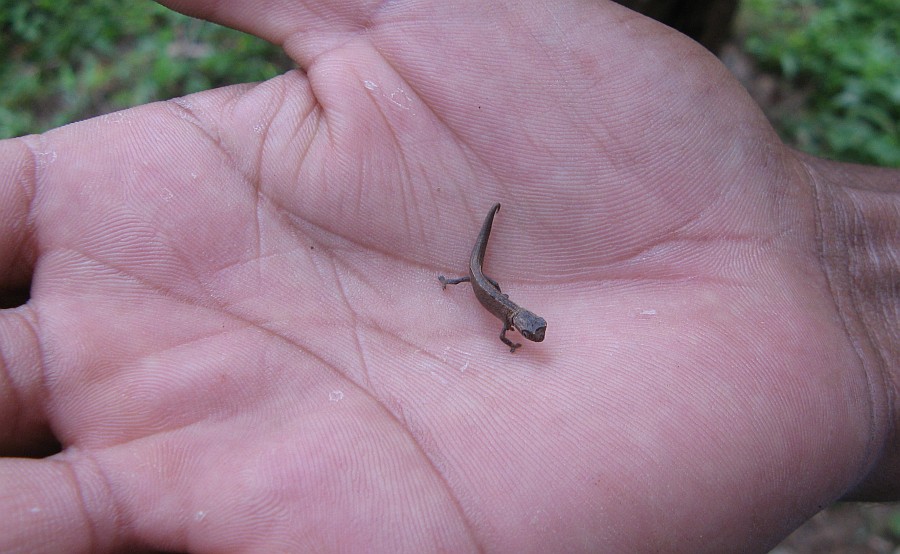
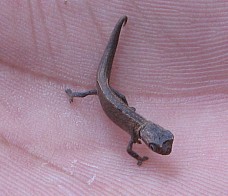 High in the rainforest of Montagne d'Ambre National Park in northern Madagascar we found the world's smallest chameleon, the Dwarf Chameleon, Brooksia minima. Our guide, Arnaud, sifted through the leaf litter at the base of a hardwood tree, and within a few seconds came up with this little fellow which fit easily in his hand. Unlike other chameleons, the Dwarf Chameleons don't change color, but are always dark brown. These small chameleons are no more than 2.5 cm (1 in). Click on the picture to see how small it is, compared to the hand it's in.
-
08-24-2010, 09:59 PM #130C.I.A.
- Join Date
- Jun 2009
- Posts
- 2,887
 -Mosasaur: was a giant, meat-eating marine reptiles ( it is not a dinosaur) that lived during the late Cretaceous period.It was up to 33ft (10 m) long. Mosasaurs had four paddle-like limbs on a long, streamlined body and a long, powerful tail.The large head had huge jaws (up to 4.7 ft =1.45 m long) with many teeth. The jaws could open about 3 feet (1 m). The lower jaw is loosely hinged to the skull with a moveable joint on each side (behind the teeth). This loose joint let it swallow huge prey, like some snakes. They hunted fish, turtles, mollusks, and shellfish. Our Mosasaur fossils were found in the Phosphate mines of Khouribga, Morocco. They date back to about 65 million years ago..
-Elasmosaur: Elasmosaurs descend from the Plesiosauia family, they flurished back in the late cretaceous age about 69-66 million years ago; they can be found in North America and Africa; they may have weighed up to 5100 lbs or 2.3 tons and they reached about 45 fee in length; their primary diet consisted of fish. The Elasmosaur was the longest member of the elasmosaur family and in fact, the longest-known plesiosaur. It was a marine reptile, swimming in the shallow Mesozoic seas. More than half of its total length was neck - 26 feet (8m) out of a total 45 feet (14m). Its neck had 71 vertebrae, many more than the earliest plesiosaurs, which had about 28 neck vertebrae. The neck probably served to move the head towards the prey with a very rapid darting movement. The head was relatively small, and the jaws had sharply-pointed teeth for catching fish. All our Elasmosaur fossils were found in the phosphate mines of Oued Zem Morocco.
 -Pliosaur: (pronounced PLY-oh-SAWR) Pliosaurs (meaning "greater lizard") were huge, short-necked plesiosaurs. These flippered marine reptiles were carnivores with sharp teeth in large, powerful jaws. They may have eaten ichthyosaurs and other plesiosaurs. They lived during the Jurassic and Cretaceous periods.Some Pliosaurs include Peloneustes, Macroplata, Kronosaurus, and Liopleurodon. Our Pliosaur fossils were found in the Sahara desert in Moroccoo, and they date back to the cretaceous period (115-95 million).


 Reply With Quote

Similar Threads |
|
 Posting Permissions


|