


ok ra lagi na... designed na ang GPU to w/stand that 95 Deg C temp... kamo gyud... naa ko diri sa semicon industry... naka sabot ko how a silicon works... taas kaayo na'g MTBF and FIT... you worry too much peeps... hehehe
ayaw mo kabalaka sa temp... ang kaon sa kuryente sa whole system ang kabalak-an ninyo aning uber fast GPUs of today... hehehe...
mawala ang argument sa CPU power consumption ani nila... hehehehe...
Results 21 to 30 of 57
-
11-07-2013, 10:25 PM #21C.I.A.


- Join Date
- Mar 2005
- Posts
- 10,898

Last edited by lloyd_joy; 11-07-2013 at 10:28 PM.
-
11-07-2013, 10:27 PM #22Elite Member

- Join Date
- Jul 2011
- Posts
- 1,344
bitaw, tanan man gud maguba, pati relasyon, wahahahaha, pero not going there, ang akoa lang is lifespan, buying that VC means that your future proofing for about 3-4 years(i dont know sa uban pero in ana ko, or atleast playable pa ang mga GPU hog games that time.), unsaon nalang kung mas short pa dira ang lifespan tungod sa sobra ka init, mao ng nakapait, Originally Posted by POPiO

-
11-07-2013, 10:35 PM #23Elite Member

- Join Date
- Apr 2013
- Posts
- 1,787
@dlareG aahahha.. I doubt murag dli na.. cguro makaduwa pa ka in 3-4yrs in low settings na cguro..
like BF4 ug COD ghost which has a almost 20Gb sa BF4 ug almost 30GB sa COD ghost.. ahahaa unsa na kaha after 5 to 10 yrs or less..
basin ang installer ani maabot na ug 100GB ..
advice lang.. mao ni ako nakat-onan dri sa istorya.net f nakapalit ka ug parts let's say VC, nya brand new huh..
human gani ug 1yr .. imu na ibaligya sa B&S and buy a new 1 .. mao na ako karon mao na ako bisyo .. ^_^
bahalag mogasto ka gamay kay mopalit ka ug bag-o.. the thing is brand new ug mas latest na imu gamit ..
hope nakasabot ka sa ako paibot .. d man ka maglisod halin labina na 1yr kapin ra imu parts nga ibaligya nya powerful pa gihapon like VC ug uban pa.. dghan japon mag-apas ana.. believe me .. . . ^_^
-
11-07-2013, 10:37 PM #24C.I.A.

- Join Date
- Feb 2009
- Posts
- 3,985
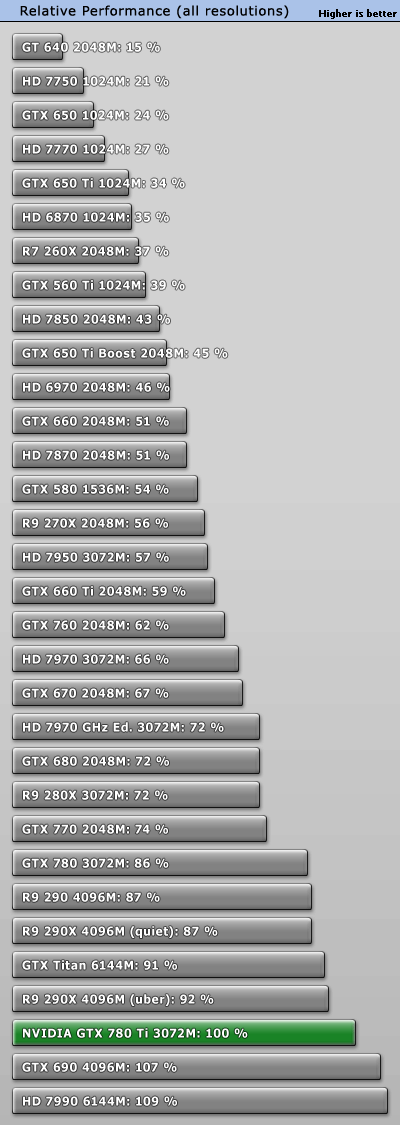
Heat will only be destructive if taas siya kumpara sa specification sa component. Example would be AMD processors at 62c limit yet you are running it at 80c everyday. AMD already assured us through reviews na the R9-290x and the 290 were designed to run at such temperature w/c is 95c.
Anyway speaking of the devil.
NVIDIA GeForce GTX 780 Ti 3 GB Review | techPowerUp
I must say I'm impressed sa iya scaling performance after overclock. Price is a bit expensive though.
-
11-07-2013, 10:40 PM #25Elite Member
- Join Date
- Jul 2011
- Posts
- 1,344
grabe naman sad ng 5-10 years pops oi, wahahaha, well, good advice, i will maybe try that for the next VC/component that ill own, haha, thanks pops! Originally Posted by POPiO
- - - Updated - - -
"A bit", for me that is very very understatement, hahahah Originally Posted by Sempron Guy
-
11-07-2013, 10:46 PM #26C.I.A.
- Join Date
- Feb 2009
- Posts
- 3,985
^Compared sa R9-290x oi
-
11-07-2013, 10:50 PM #27C.I.A.
- Join Date
- Mar 2005
- Posts
- 10,898
kani gyu'ng Green Team noh, dili gyud pa alkanse... hehehehe... gi shutdown nila ang current fastest offering sa Red Team... but the Red will be back for sure... neutral ko ani nila duha kay user ko sa ilahang mga offerings... and both of my babes from both GPU companies still packs a big punch in gaming... ganahan ra ko mag tan-aw sa performance crown then most of all, sa prices nila...
ah basta, for me as of this writin', the "King" to Price-Performance Ratio is still the "RED"...
-
11-07-2013, 10:51 PM #28Elite Member
- Join Date
- Apr 2013
- Posts
- 1,787
@dlareG mao ni ang MANTLE
----->
"Mantle lets you use AMD Radeon GPUs the way they are meant to be used, unlocking many new opportunities and increased CPU and GPU performance," said David Anfossi, studio head, Eidos-Montréal. "Because of this, Mantle is one of the most important changes to PC graphics in many years."
Mantle benefits include reducing the CPU overhead to enable nine times more draw calls per second than other APIs. This will provide PC gamers proper multi-tasking scaling on the CPU without the need to handle all the background draw calls required by the older APIs. Other Mantle benefits include leveraging optimization work from next-generation game consoles to PCs and new rendering techniques. Thus with direct access to all GPU features, developers can unlock higher graphics performance on consoles and gaming rigs with GCN-based GPUs.
The first company to support Mantle was Electronic Arts (Frostbite 3 engine). Now three other developers are on the Mantle bandwagon. "AMD's Mantle technology lets us get more out of the hardware than any other solution available," said Dan Baker, co-founder, Oxide Games. "Adding Mantle support to our multi-platform, 64-bit Nitrous engine realizes significant gains in performance on Mantle-enabled hardware without adding enormous development overhead."
Source: AMD Mantle Now Adopted by Three More Game Developers
CAC naa na cla available r9-280x
see the link below: but before nmu I-click mas maau naka-log in ka daan sa fb .. ^_^
https://www.facebook.com/photo.php?f...type=1&theater
-
11-07-2013, 10:54 PM #29Elite Member
- Join Date
- Jul 2011
- Posts
- 1,344
aw, wahahaha, bitaw, Originally Posted by Sempron Guy
- - - Updated - - -
cant click bro @POPiO, diri kos opisina, haha, pero kakita na ko ana sa FB, bitaw, murag CAC jud ko mukuha ani.
-
11-07-2013, 11:01 PM #30C.I.A.
- Join Date
- Feb 2009
- Posts
- 3,985
Less likely mubalos ang AMD at least for this year. Nag hatag na sila official statement na they won't be competing anymore ana nga price range. And they still got the fastest card in the market. The HD7990 can be had for around $600-700 now.

 Reply With Quote
Similar Threads |
|
 Posting Permissions


|