


Originally Posted by petite fleur

Nice......thnx for sharing
Results 161 to 170 of 701
Thread: We can learn from the Saints!
-
07-19-2011, 12:50 PM #161Senior Member


- Join Date
- Nov 2010
- Posts
- 562
 Re: We can learn from the Saints!
-
07-19-2011, 02:01 PM #162Elite Member
- Join Date
- Jul 2011
- Posts
- 1,344
Re: We can learn from the Saints!
‪Take and Receive‬‏ - YouTube
Prayer of St. Ignatius Loyola
This is a very known song but I don't know if you have heard this version.
Pray for us St. Ignatius.
-
07-19-2011, 04:37 PM #163C.I.A.

- Join Date
- Nov 2010
- Posts
- 17,332
Re: We can learn from the Saints!
-
07-19-2011, 04:55 PM #164C.I.A.
- Join Date
- Nov 2010
- Posts
- 17,332
Re: We can learn from the Saints!

-
07-19-2011, 05:01 PM #165Senior Member
- Join Date
- Nov 2010
- Posts
- 562
Re: We can learn from the Saints!
Originally Posted by THE KID
Thnx KID...nindot sab ning imo style dah, murag Trivia ...Sige akoy tig hatag ug quotes
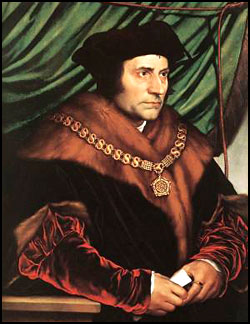
“Our purpose is to be the sword and shield for people of faith ... to defend and protect Christians and their religious beliefs in the public square.”
(St. Thomas More)
-
07-19-2011, 05:04 PM #166Senior Member
- Join Date
- Nov 2010
- Posts
- 562
Re: We can learn from the Saints!
Originally Posted by THE KID
"Because of the diverse conditions of humans, it happens that some acts are virtuous to some people, as appropriate and suitable to them, while the same acts are immoral for others, as inappropriate to them"
(St. Thomas Aquinas)
-
07-20-2011, 06:48 AM #167 Re: We can learn from the Saints!
@petite: nice song! thanks heaps...yes me too I get that "red in the ear" thing from time to time but somehow I manage to control what comes out of my mouth. Strength doesn't come from me. I believe it's God-given
@KID: ikaw hap hilig kay kag trivia murag sa guess the name threads ba hehe..keep it up though =)
@ Korastaltz: thanks for finishing KID's sentences. Have a safe day ahead the 3 of you....
-
07-20-2011, 08:35 AM #168Senior Member
- Join Date
- Nov 2010
- Posts
- 562
Re: We can learn from the Saints!
St. Dominic Guzman

St Dominic & the Rosary
by Robert Feeney
Dominic Guzman was born in 1170 in Calaroga, Castile (Spain) in an age of change. The sons of Mohammed had swept across the Mediterranean, turning Christian temples into Moorish mosques, leaving many regions of Spain under the Moorish yoke. At the age of 14, Dominic went to the University of Palencia and graduated with a degree in liberal arts and sacred sciences. He was known for his devotion to study and reverence for learning. He was generous, compassionate, gentle, and strong. At the age of 24, he was ordained a priest by the bishop of Osma, Spain.
At the age 33, Dominic exercised his priestly ministry in the southern region of France called Languedoc. It was in this region that St. Dominic came in contact with the Albigensian heresy. This heresy was an offshoot of Manicheanism. Manes was a preacher who lived in the plains between the Tigris and Euphrates during the third century. Manes taught that all matter is evil and that man is a combination of two opposing principles; a spiritual being created by God, thrust into a material body created by an evil being. The Albigensians believed that adultery, fornication, and suicide were praiseworthy; there is no heaven, no hell, no moral code. St. Dominic traveled from village to village teaching the truths of the Faith. The Albigensians jeered, insulted, and pelted him with stones as he traveled along their roads. He prayed to God in churches at night and hardly ever slept. His contemporaries described him as a "strong athlete," capable of great physical endurance. He was always good to talk to when you were in trouble, always affectionate, and quickly made you feel at home.
It was during this time that the tradition of the Rosary comes to us. The form in which it has come down to us will best be stated in the words of P. Corneluis de Snecka, a disciple of the French Dominican Alan de la Roche:
We read that at the time when he was preaching to the Albigenses, St. Dominic at first obtained but scanty success: and that one day, complaining of this in pious prayer to our Blessed Lady, she deigned to reply to him, saying:'Wonder not that you have obtained so little fruit by your labors, you have spent them on barren soil, not yet watered with the dew of Divine grace. When God willed to renew the face of the earth, He began by sending down on it the fertilizing rain of the Angelic Salutation. Therefore preach my Psalter composed of 150 Angelic Salutations and 15 Our Fathers, and you will obtain an abundant harvest.'
The place of the revelation was the church of Prouille and the time was 1208. The claim of place and time are most strongly supported by the tradition of the Dominican Order. Pope Leo XIII affirmed over and over the Dominican origin of the Rosary and in a letter to the Bishop of Carcassone (1889), he accepts the tradition of Prouille as the place where the Blessed Virgin Mary appeared to St. Dominic, revealing this devotion. The tradition that Mary first revealed the Rosary devotion to St. Dominic is supported by 13 popes.
St. Dominic went into the villages of the heretics, gathered the people, and preached to them the mysteries of salvation - the Incarnation, the Redemption, Eternal Life. As the Holy Virgin had taught him to do, he distinguished the different kinds of mysteries and after each short instruction he had ten Hail Marys recited. St. Dominic found great success in this new devotion, bringing about the conversion of the Albigensians. The late Dominican Reginald Garrigou-Lagrange, who was a teacher of Pope John Paul II when he was a student at the Angelicum in Rome, stated: "Our Blessed Lady made known to St. Dominic a kind of preaching till then unknown; which she said would be one of the most powerful weapons against future errors and in future difficulties."
The battle of Muret was fought in 1213 between the Catholic forces, led by Simon de Montfort and the Albigenses forces, led by Raymond of Toulouse. The Catholic forces were in the habit of praying the Rosary, at the suggestion of St. Dominic. The Catholic force won the battle of Muret, looked upon the victory as miraculous, and counted it as the fruit of prayer. The English Dominican historian, Nicholas Trivet wrote, "St. Dominic warred by prayer, De Montfort by arms. The first chapel in honor of the Rosary was built, out of gratitude, by Simon de Montfort in the town of Muret."
The Confraternity of the Rosary was first started by St. Dominic in Palencia in 1218. It's members pray the 15 decades of the Rosary during the coarse of each week. Mary has confirmed the value of the Confraternity in her well-known Rosary promises: "I have obtained from my Son that all the members of the Confraternity have in life and in death all the Blessed as their associates." Pope Clement VIII declared that St. Dominic established the Confraternity of the Rosary in the Church of St. Sixtus in Rome. Pope Alexander VI in 1495, addressed St. Dominic as "the renowned preacher long ago of the Confraternity of the Rosary, and through his merits, the whole world was preserved from universal ruin." The Confraternity retained its first fervor for 100 years after it was instituted by St. Dominic. After this, it was forgotten. Divine Providence assigned the restoration of it to the eminent French Dominican theologian and preacher, Alan de la Roche. During the 15th century, this son of St. Dominic restored the Rosary to its former vitality.
On October 7, 1571, members of the Confraternity of the Rosary in Rome, processed praying the Rosary for a blessing on the Christian fleet fighting the Turks at Lepanto. Pope St. Pius V, a Dominican, joined them, and God revealed to him that Mary had at that hour obtained a glorious victory for the Christian fleet. This great victory saved Europe from the Mohammedan peril.
source: St Dominic & the Rosary | Catholic-Pages.com
-
07-20-2011, 05:46 PM #169Senior Member
- Join Date
- Nov 2010
- Posts
- 562
Re: We can learn from the Saints!

“Science can purify religion from error and superstition. Religion can purify science from idolatry and false absolutes.”
(Blessed Pope John Paul II)
"The great danger for family life, in the midst of any society whose idols are pleasure, comfort and independence, lies in the fact that people close their hearts and become selfish"
(Blessed Pope John Paul II)
-
07-21-2011, 08:12 AM #170Senior Member
- Join Date
- Nov 2010
- Posts
- 562
Re: We can learn from the Saints!
St. Thomas the Apostle

On the day of His resurrection, Christ appeared to them. Thomas, however, was not with them. When they told him afterwards, that they had seen the Lord, he doubted, and said: "Except I shall see in His hands the print of the nails, and put my finger into the place of the nails, and put my hand into His side, I will not believe." By this, Thomas meant that he did not believe the resurrection of the Lord, although he had several times heard from the lips of Jesus, not only a prophecy of His sufferings and death, but also of His resurrection; and although the Apostles and several pious women had repeatedly assured him that they had seen the risen Lord. The Holy Fathers say that Christ permitted this unbelief in Thomas, not only that from it we might learn our own weakness, but also that all who believe in Him might be so much better instructed in the mystery of His resurrection, and strengthened in their belief in it. Hence, St. Gregory writes: "The unbelief of Thomas has been more useful to our belief than the belief of the other disciples of the Lord, who, without hesitation, received the news of His resurrection," because the unbelief of Thomas gave occasion for new proofs of the resurrection of Christ.

 Reply With Quote
Similar Threads |
|
 Posting Permissions


|